What you need to know
For most solo travellers leaving from central Sydney, take a T8 Airport & South Line train to International Airport Station for Terminal 1 or Domestic Airport Station for Terminals 2 and 3. Sydney Airport says the train journey from the city takes about 13 minutes, with services approximately every 10 minutes. Check live running information and your airline terminal before leaving because T1 cannot be reached on foot from T2 or T3.
Start with the right Sydney Airport terminal
Sydney Airport uses one airport code, SYD, but its international and domestic precincts are physically separated. Terminal 1 handles international flights. Terminals 2 and 3 handle domestic flights, with different airlines using each terminal. Search your airline booking for T1, T2 or T3 before choosing a station, road route or drop-off point.
This matters because the International Airport and Domestic Airport train stations are different stops. A driver also needs to follow different airport-road signs for International and Domestic. If you arrive at the wrong precinct, you cannot simply walk across: Sydney Airport states that T1 is not walkable from T2 or T3.
T2 and T3 are the exception. They sit in the same domestic precinct and are connected by a pedestrian path through the P1 car park. Sydney Airport estimates that walk at about five minutes, but travellers should still follow their airline’s terminal information rather than treating the domestic buildings as interchangeable.
The five main ways to get to Sydney Airport
There is no single winner for every trip. The train provides the most predictable city-to-airport travel time, while a car can be simpler with several passengers, young children, mobility requirements or bulky luggage. Buses can avoid the airport train-station access fee, but they serve specific corridors and are more exposed to road traffic.
| Option | Often best for | Check before leaving |
|---|---|---|
| T8 airport train | Solo travellers and journeys from central Sydney | Correct airport station, service changes and station access fee |
| Route bus | Nearby suburbs and travellers avoiding the train-station fee | Route, terminal served, luggage space and live traffic |
| Taxi | Door-to-door travel, groups and substantial luggage | Traffic, terminal and metered or quoted fare |
| Rideshare | Door-to-door trips with an app fare estimate | Surge pricing, vehicle size and exact terminal drop-off |
| Private car | Family drop-offs or travellers with pre-booked parking | Traffic, toll route, parking location and shuttle time |
How to get to Sydney Airport by train
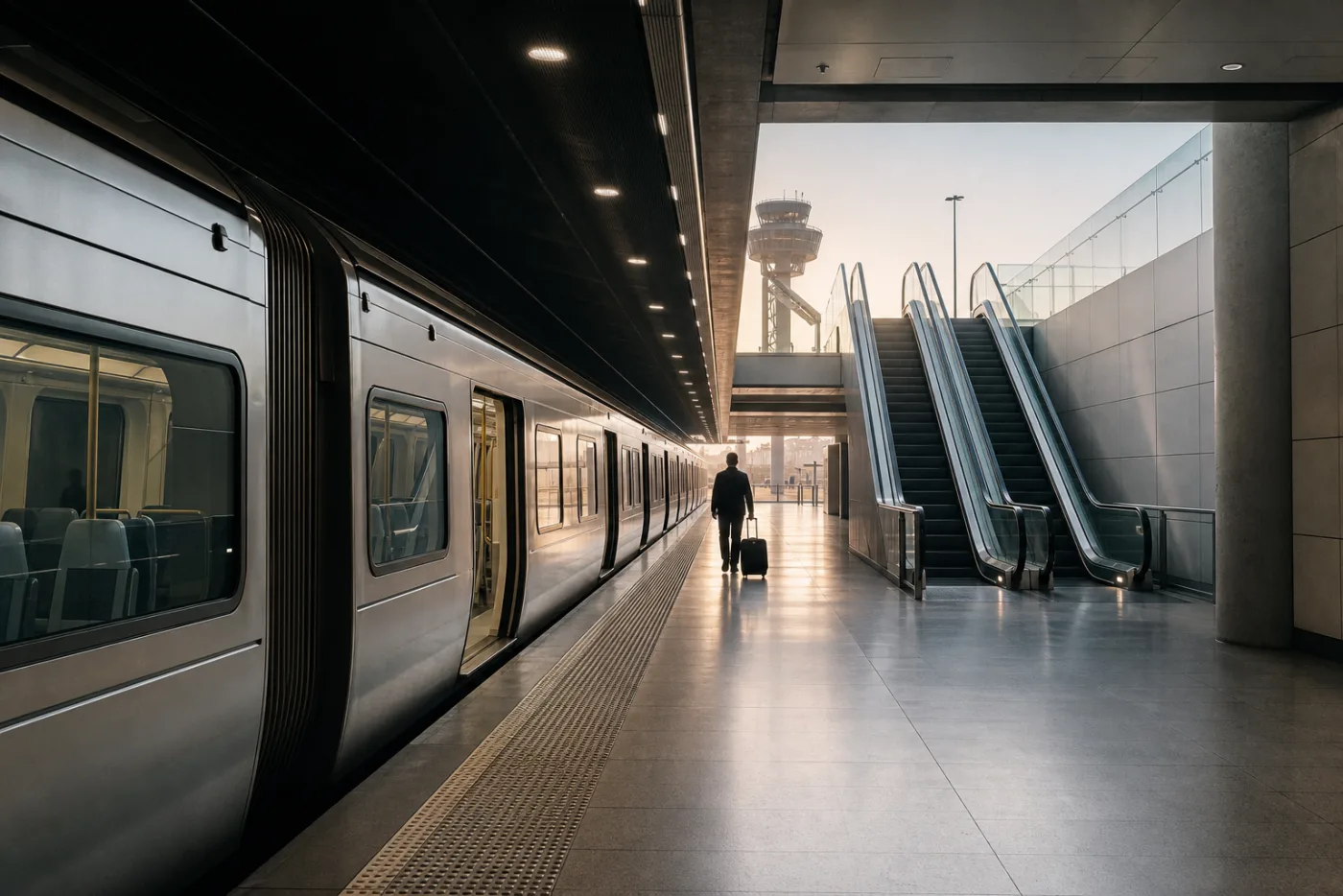
T8 Airport & South Line trains connect central Sydney with both airport precincts. Sydney Airport describes the city journey as about 13 minutes and services as approximately every 10 minutes, while Transport for NSW advises that airport-line services operate every day between roughly 5:00 am and midnight. Treat those frequencies as a planning guide and check the Transport for NSW Trip Planner for the exact service on your travel date.
For an international flight, leave the train at International Airport Station for T1. From Terminal 1 Arrivals, the station can be reached near Exit A or by the lift and escalator near Check-In desk A. For a domestic flight, use Domestic Airport Station; lifts and escalators near baggage carousel 1 connect the station with both T2 and T3.
You can tap on and off with an Opal card, a compatible contactless debit or credit card, or a digital wallet. Use the same payment method at both ends. An airport station access fee is added to the normal train fare. Transport for NSW listed the adult access fee as A$18.61 when this guide was reviewed on 29 August 2026, but fares change, so calculate the current total in the official Trip Planner before deciding that rail is the cheapest option.
The train is most compelling when road traffic is uncertain or one person is travelling from near a city station. A taxi or rideshare can become competitive for a group because the rail cost is charged per person, while the road fare is generally shared across the vehicle.
How to get to Sydney Airport by public bus
Public buses can be useful from suburbs that sit directly on an airport route, especially when the train would require travelling away from the airport to change lines. Route 420 runs between Burwood and Mascot via Campsie and Rockdale and serves both the International and Domestic terminals. Route 350 connects Bondi Junction with the Domestic terminal via Mascot, Maroubra and Coogee; it does not provide the same direct T1 stop as Route 420.
For very late or early travel, the N20 night service runs between Riverwood and the city via the International terminal during the overnight period. This is not a universal substitute for daytime airport transport: check the live route, operating hours and whether it serves your departure terminal before relying on it.
Opal and contactless payment can be used on the bus. There is no airport train-station access fee, but the trade-off is a journey exposed to road traffic, intermediate stops and more variable luggage space. Build a larger buffer than you would for a direct train, particularly in weekday peaks or when roadworks affect the airport precinct.
Taxi, rideshare or driving to Sydney Airport
Sydney Airport is about eight kilometres from the CBD. The airport estimates a drive of roughly 25 minutes in light traffic, but peak-hour congestion, incidents and the route selected by a navigation app can change that substantially. Southern Cross Drive and O’Riordan Street provide common approaches from the city, while the M8 offers another connection and may involve tolls.
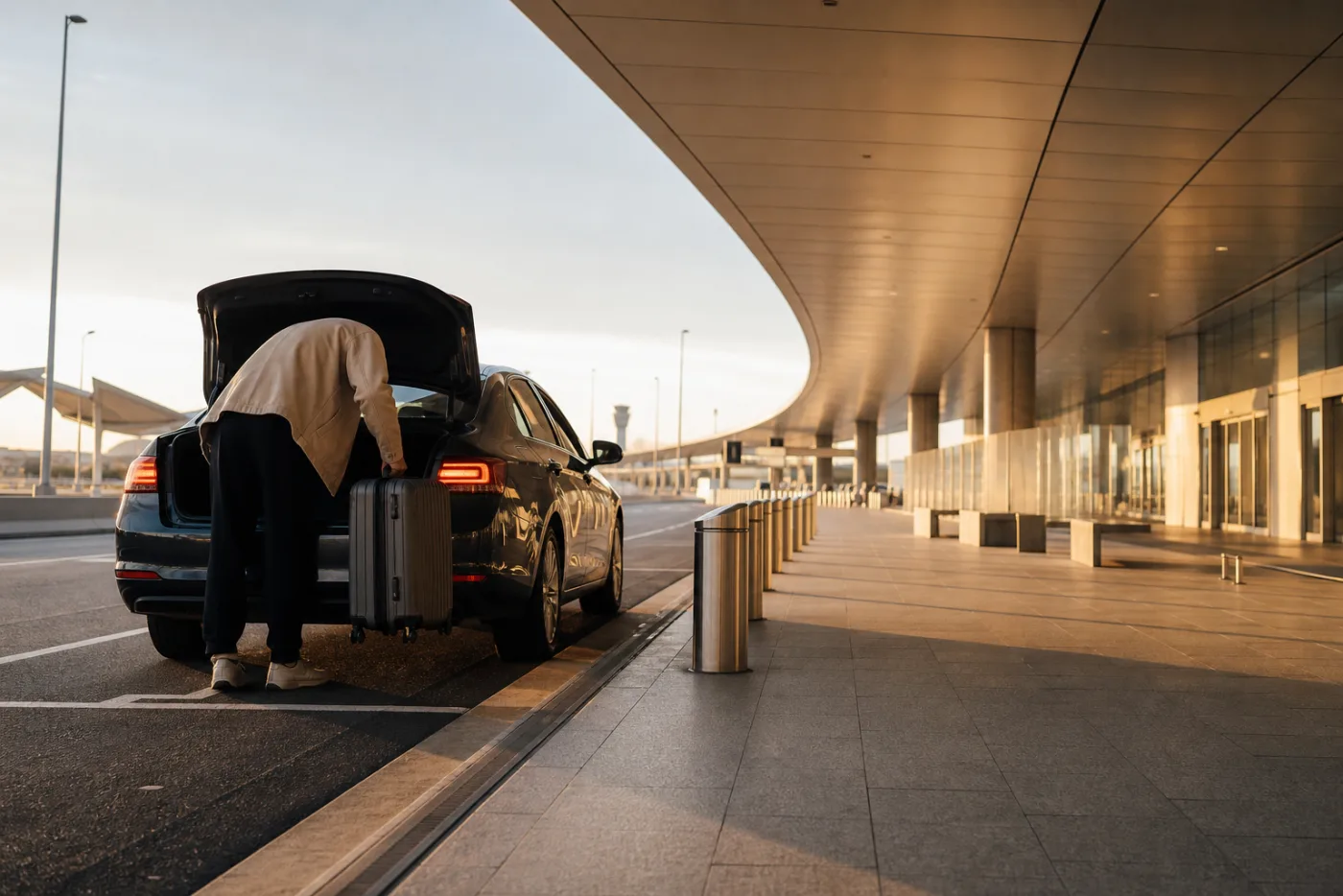
For a taxi, tell the driver both the terminal and whether the flight is domestic or international. For rideshare, set the airline terminal as the destination rather than dropping a pin labelled only Sydney Airport. Departing passengers can be dropped outside each terminal, but drivers must follow the signed kerbside rules and cannot wait indefinitely at departures.
A taxi or rideshare is often the easiest option for a family, a group that can split the fare, a traveller with several bags, or a journey starting away from a convenient station. Compare the live app quote or likely taxi fare with the combined train cost for the entire party. Also check that the selected vehicle can safely hold every passenger, suitcase, mobility device or child restraint required for the trip.
If driving yourself, decide whether you are being dropped off or parking. Pre-booked airport parking can be cheaper than turning up, but the lowest-priced car park may require additional shuttle and walking time. Add that transfer to your journey plan rather than treating arrival at the airport precinct as arrival at check-in.
What to do if you reach the wrong terminal
Do not try to walk between T1 International and the T2/T3 Domestic precinct. The complimentary Terminal Transfer Bus runs between the precincts about every 15 minutes from 5:30 am to 10:30 pm, and Sydney Airport says the ride takes about 10 minutes. Bus stops are on the Arrivals level outside the terminals. Allow additional time to find the stop, wait, unload and return to the correct departures level.
The Airport Link train takes about two minutes between the International and Domestic airport stations, but it is a paid journey and the airport-station fee rules differ from an ordinary suburban trip. Route 420, taxi and rideshare can also connect the precincts. Airline-operated transfer services may be available for eligible connecting passengers, so follow the airline’s instructions when transferring between flights rather than assuming the public option is best.
A terminal mistake can consume far more time than the vehicle journey suggests. Security, immigration, baggage collection and airline check-in rules still apply. If the flight is close, contact the airline while moving to the correct terminal instead of waiting until you reach the check-in desk.
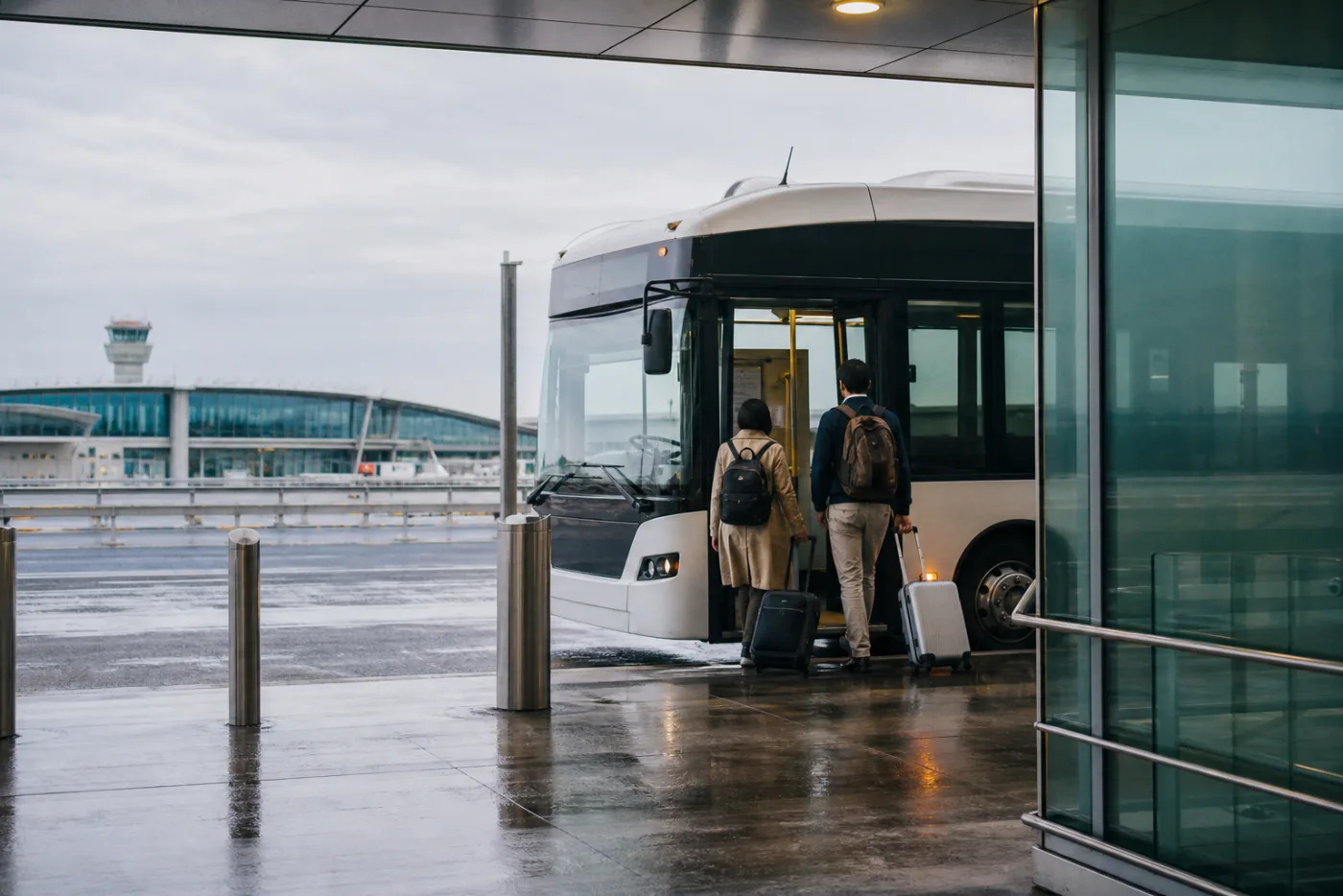
Plan the trip to Sydney Airport in five steps
1. Confirm SYD and the terminal
Read the airline booking and identify T1, T2 or T3 before choosing a station, bus or road destination.
2. Compare the whole-party cost
Include the airport train-station fee for every passenger, or road tolls, parking and the right vehicle size.
3. Check the live journey
Use the Transport for NSW Trip Planner or a live navigation service shortly before departure for disruptions and traffic.
4. Add the hidden walking time
Allow for the station lift, bus stop, car park shuttle, luggage, terminal entry and the walk to your airline’s check-in area.
5. Protect the airline deadline
Work backwards from the airline’s check-in and bag-drop guidance, then add a disruption buffer appropriate to the route.
Which Sydney Airport transport option should you choose?
Choose the train when a predictable travel time matters and your journey begins near a useful station. Choose a direct bus when the route serves your suburb and terminal without an awkward change. Choose taxi or rideshare when door-to-door simplicity, luggage or group travel matters more than the lowest individual fare. Drive when airport parking or a family drop-off solves a practical need that public transport does not.
The best option is the one that reaches the correct terminal with enough margin for the airline’s process. A nominally faster trip that leaves no recovery time for a cancelled train, traffic queue or terminal mistake is not the safer plan. Recheck live conditions on the day and keep the airline terminal visible in the booking until you arrive.
Compare a real airport or lounge
Sydney Airport loungesCompare lounge access after choosing the correct SYD terminal.↗The House Lounge, SydneyCheck Terminal 1 entry conditions and the operator booking link.↗How early can you enter a lounge?Plan the time between airport arrival and boarding.↗Frequently asked questions
What is the easiest way to get to Sydney Airport from the CBD?+
For many solo travellers, the T8 Airport & South Line train is the easiest because the city-to-airport journey is about 13 minutes and avoids road traffic. A taxi or rideshare can be simpler for groups, substantial luggage or a door-to-door journey.
Which train station should I use for Sydney Airport?+
Use International Airport Station for Terminal 1. Use Domestic Airport Station for Terminals 2 and 3. Confirm the terminal on the airline booking before boarding.
Can I use a contactless card on the Sydney Airport train?+
Yes. Transport for NSW accepts compatible contactless debit and credit cards and digital wallets, as well as Opal cards. Use the same card or device to tap on and off.
Can I walk from Sydney International Airport to the domestic terminals?+
No. T1 International is not walkable from T2 and T3. Use the terminal-transfer bus, train, Route 420, taxi, rideshare or an eligible airline transfer service.
How early should I leave for Sydney Airport?+
Start with your airline’s current check-in and bag-drop guidance, then add the complete transport time, terminal walking time and a buffer for disruptions. The right departure time depends on your origin, terminal, transport mode and flight.
Sources and review notes
This guide provides general information. Lounge-specific conditions can change, so check the visible review date and confirm time-sensitive details with a first-party airport, lounge or access-network source.
- Sydney Airport — Transport options
- Transport for NSW — Getting to and from Sydney Airport
- Sydney Airport — Getting between terminals
- NSW Government — Airport road approaches and travel advice